Tuesday, 27 July 2010

Venus Fly Trap

Image source
The Venus flytrap is probably the most famous example of a rather peculiar thing - a meat eating plant. While most plants are passive recipients of sunlight, water and the unwanted attention of herbivores, the Venus flytrap eats living things. And while many meat eating plants, such the pitcher plants, passively attract prey before passively capturing and passively digesting them, the Venus flytrap could be described as something more akin to an ambush predator. Strangely enough, Venus is the Roman goddess of love, so I guess someone was going through some difficult times when they named it.

Saturday, 24 July 2010

Giant Isopod


The giant isopod is a deep sea crustacean, a relative of crabs, shrimp and most obviously, woodlice. It looks a lot like a woodlouse out for a swim. A ONE AND A HALF FOOT LONG woodlouse out for a swim. These things get BIG! The effect is strange, we just don't often see such massive compound eyes and chunks of exoskeleton of that size, especially when it looks so similar to something so small. It seems uniquely weird and otherworldly. This impression isn't helped by having 2 pairs of antennae and 4 sets of jaws.

Thursday, 22 July 2010

Naked Mole Rat

Image source
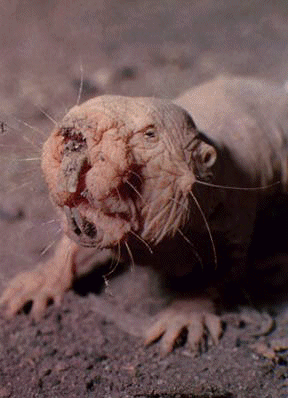
First thing's first, the naked mole rat is one ugly animal. So ugly in fact, it almost pulls off a full 180 to become quite cute! The rather unnerving appearance is perhaps understandable given its unforgiving lifestyle and habitat; the mole rat lives underground in the hotter, drier more uncomfortable parts of east African grassland. Almost totally hairless, almost totally blind and, being a rodent, in possession of huge, constantly growing teeth, the naked mole rat is perfectly adapted to a life of dark tunnels and tunneling in darkness. They can even walk backwards as quickly and confidently as they walk forwards. Their blood has a stronger than usual affinity to oxygen and it has a lower metabolic and respiratory rate than other small rodents, meaning that the mole rat needs less food and less oxygen than you'd expect. They are also unable to feel pain in their skin, this is believed to help them survive as all that carbon dioxide would cause a build up of acids in their body. You can't have the little blighters itching and getting cramp the whole time, can you?

Saturday, 17 July 2010

Hagfish

Image source
Aaaahh, the hagfish. A creature so wretchedly, dispicably, unapologetically, even proudly unattractive, it's almost inspiring. Lucky then, that its eyes are so primitive they can distinguish between light and dark, but little else. In fact, the hagfish is very primitive indeed; our beloved Planet Earth has been graced with the presence of the hag for some 300 million years! This... fish (sort of) was in the sea when metre long scorpions were bestriding the land and giant dragonflies ruled the air.

Thursday, 24 June 2010

Praying Mantis

Image source
I've always rather liked mantids or mantises or whatever the plural is meant to be. They are a type of insect, which usually means that there is a ridiculous diversity of size and shape around each species. Such is the case here. I, of course, refer to the mantids with the long, stiff thorax, the small triangular head and the large forelegs held aloft, characteristics that give a certain dignified elegence and the name 'praying mantis'.

Tuesday, 22 June 2010

Deep Sea Anglerfish

Image source
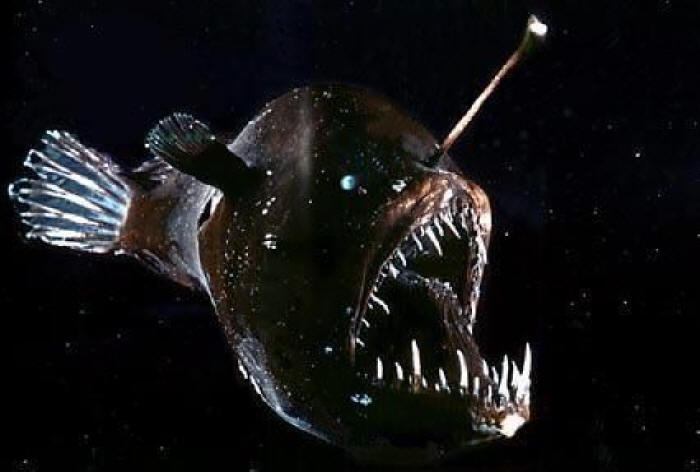
There are a couple hundred different species of anglerfish, living in open water, the deep sea or the ocean floor. What they all share is the hunting equipment that lends them their name, a fleshy growth on the head that ends in a bulb containing bioluminescent bacteria. This is used as a lure to attract unsuspecting prey like a moth to a flame, or to a really big mouth. A really, REALLY big mouth. Anglerfish have maws that occupy the entire front of the beast. Some appear to be more jaw than fish, or all jaw with a bit of fish to get the jaws to where they want to go. They also have extremely long, backward inclining teeth, to the extent that some anglerfish don't appear to be capable of actually closing their mouth.